How to Detangle Natural Hair Gently
Detangling is controlled separation, not combat
To detangle natural hair gently, give the strands water, slip, small sections, and time. Then work from the ends toward the roots while supporting the hair above each knot. That simple order matters more than owning a drawer full of tools shaped like futuristic sea creatures.
Textured hair varies widely in strand thickness, density, curl pattern, chemical history, and current condition. A tool and product combination that glides through one head may stall on another. Use the method below as a starting structure, then adjust section size and product amount without accepting pain as part of the process.
Gather the useful basics
You need clips, water, a conditioner or detangling product with useful slip, and clean fingers. A seamless wide-tooth comb can follow. Some people prefer a flexible detangling brush, but no tool has diplomatic immunity: if it catches, tears, or requires force, stop and change the angle, section, or tool.
Remove rings and check combs, clips, and fingernails for rough edges. Place a towel nearby and work where loose shed strands can be collected safely. If detangling is part of washing, set up the rest of your natural hair wash-day routine before wet hands begin opening cabinets.
Make the hair damp and divide it
For textured or tightly curled hair, the American Academy of Dermatology recommends combing while the hair is damp with a wide-tooth comb. Saturated hair can be awkward to control, while dry detangling may create more friction for many curl patterns. Aim for evenly damp hair, then add conditioner or detangler through the section according to its directions.
Divide the hair into four to eight sections, or more if density demands it. The correct section is small enough that you can see and feel what your fingers are doing. Clip or loosely twist the rest away. Trying to detangle the whole head at once is less a shortcut than a subscription to confusion.
Start with fingers and the very ends
Take one section and use your fingers to separate obvious tangles. Begin at the ends. When you meet a knot, stop pulling downward. Hold the hair just above it, add a little water or slip if needed, and tease apart the outside strands before working toward the center.
Do not yank a single-strand knot until it snaps. If it will not release, isolate it and decide whether careful trimming with proper hair shears is appropriate. Random household scissors and a frustrated midnight mood are not a precision team; a qualified stylist can help when knots or matting are beyond comfortable home handling.
Follow with a wide-tooth tool
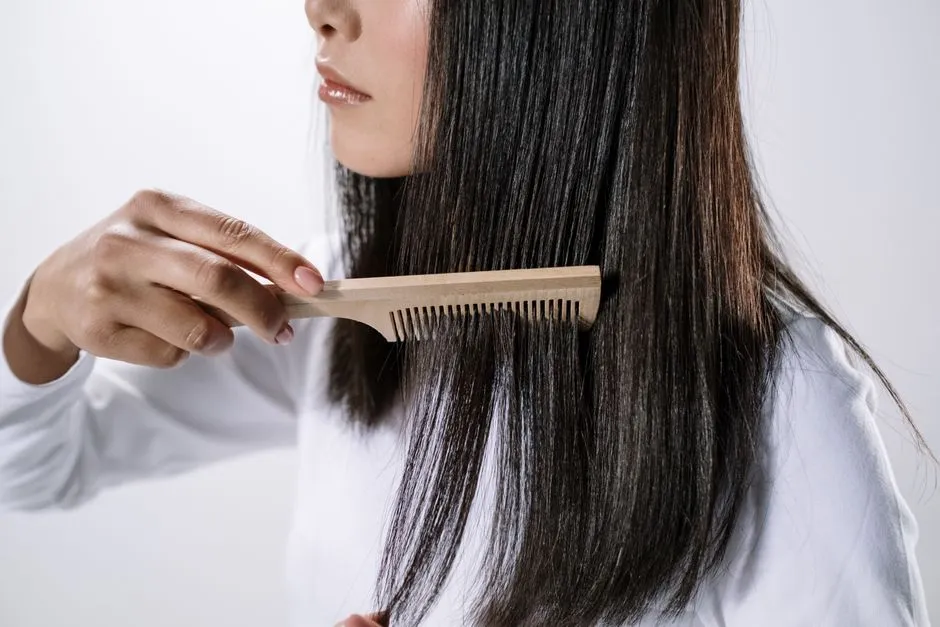
Once fingers pass through the section, place a wide-tooth comb at the ends and make short, gentle passes. Move slightly higher only after the lower part is clear. Keep one hand above the working area so each stroke transfers less force to the scalp.
If the comb stops, the answer is not more horsepower. Remove it, find the snag with your fingers, and add slip or make a smaller section. Repeated raking can turn a solvable tangle into breakage. When the tool travels from ends to roots without catching, loosely twist or clip the finished section away and continue.
Read what the strands are telling you
Some shed hair in your hands or comb is expected because released strands can remain trapped in curls until detangling. A fixed daily number is not useful for judging every person. Watch for a change from your own normal, abundant short broken pieces, patches, scalp tenderness, or a widening area of thinning.
Clean loose hair from the tool between sections so it continues to glide. Afterward, wash reusable tools according to their material and let them dry. Note which areas tangled most. Dry ends, friction at the nape, a style kept too long, or product buildup may point to the next routine adjustment.
Keep the finished style comfortable
Detangling is not a success if the next style immediately pulls the scalp. The AAD warns that repeatedly tight hairstyles can contribute to traction alopecia and states that a painful style is too tight. Choose looser tension, vary placement, and ask for a style to be redone if it hurts. See more low-tension principles in gentle styling.
Stop if you notice burning, swelling, sores, bleeding, or significant pain. Sudden or patchy loss, ongoing thinning, scalp disease symptoms, or breakage that persists despite gentler care should be evaluated by a board-certified dermatologist. A stylist can assess technique and shaping; a dermatologist can investigate medical causes. Knowing which chair you need is part of good hair care too.