Natural Hair Care Before and After Swimming
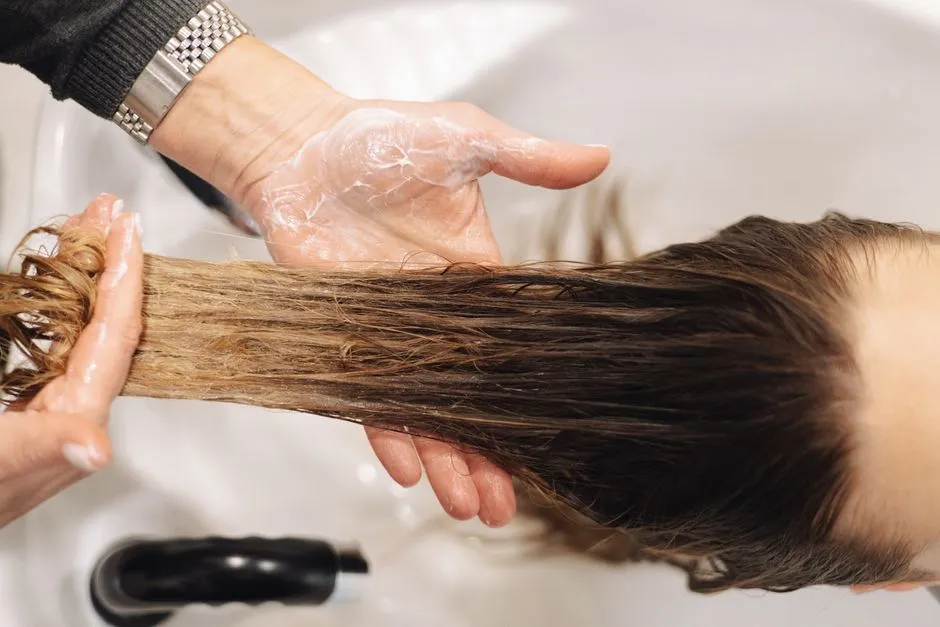
- How can you protect natural hair when swimming?
- What should you arrange before you pack?
- What should happen before you enter the pool?
- How should a cap and hairstyle work together?
- What should you do as soon as swimming finishes?
- Does every swim require a stronger clarifying wash?
- How can you detangle and dry without adding rough handling?
- What belongs on a swimming-day routine card?
- Which problems need professional care?
- What should stay out of the routine?
- Sources
How can you protect natural hair when swimming?
Wet your hair with fresh water before entering a pool, wear a comfortably fitted swim cap, and rinse promptly afterward before shampooing and conditioning. A cap is not a waterproof guarantee. Follow product and facility instructions rather than mixing homemade chlorine-removal treatments. For persistent scalp irritation, thinning or hair loss, consult a dermatologist. Sudden mouth or throat swelling or difficulty breathing needs emergency help. These are grooming measures, not swimming-safety training.
Swimming adds a specific event to your routine: contact with pool water. It is worth planning around that event instead of trying to preserve an ordinary wash-day calendar unchanged. This is a desk-researched guide for natural curls and coils, not a tested product ranking or a personalized treatment plan.
What should you arrange before you pack?
Start with the facilities, not a shopping list. Ask where you can rinse your hair before entering and after leaving the pool, whether shampooing is permitted in the changing-room showers, and what rules apply to hair products and caps. A shower symbol on a venue map does not answer all those questions.
Allow space in your plans for the post-swim routine. If you are joining friends afterward, explain that leaving the water and being ready to leave the building are different points in your schedule. There is no universal number of minutes to allocate: hair length, sections and the actual facilities differ.
Pack items by their job:
| Job | Item to identify before leaving | Detail to check |
|---|---|---|
| Covering hair | A swim cap with an appropriate size and design | Maker's fit and care directions |
| Cleansing | Your selected shampoo | Intended use and rinse instructions |
| Conditioning | Your selected conditioner | Rinse-out or leave-in; any stated contact time |
| Gentle detangling | A wide-tooth comb | Suitable for your planned wet-hair routine |
| Absorbing water | A clean towel or T-shirt | Keep it available for after the shower |
| Keeping track | Product labels or readable photographs | Exact names, ingredients and warnings |
This is an editorial packing aid, not a requirement to buy six new things. Choose from what you already have when it meets the actual instructions.
What should happen before you enter the pool?
Cleveland Clinic's swimming-hair guidance, featuring dermatologist Taylor Bullock, MD, recommends saturating hair with fresh water before pool entry. Its other protective options include leave-in conditioner and a well-fitted cap.
Check the venue's rules before applying a pre-swim product. If a product is permitted, use one intended for that application and follow its label. Do not interpret a general conditioner suggestion as permission to leave a rinse-out formula on indefinitely.
Do the preparation before pool entry rather than trying to organize products at the water's edge. This article does not assess pool conditions, teach swimming or replace lifeguard instructions.
How should a cap and hairstyle work together?
Think of the cap as a covering that must accommodate the hairstyle, not a reason to tighten the hairstyle until it fits. Ask the manufacturer about the model's size and intended hair volume when the fit is uncertain. Do not infer suitability from a photograph showing a different amount of hair.
The AAD's guidance on pulling and hair loss advises keeping hair loosely gathered beneath a covering. Repeated pulling can cause traction alopecia, and painful styling is too tight. Change a setup that pulls or hurts; do not add tighter bands to keep it in place.
A swim cap does not establish complete protection from pool water. Cleveland Clinic explicitly notes that none of its suggested methods completely blocks chlorine exposure. Keep the after-swim steps in your plan even when you wore a cap.
We have not measured water entry, tested cap materials or compared brands. For a particular cap, its own instructions remain the source for fitting, removal, cleaning and storage.
What should you do as soon as swimming finishes?
The American Academy of Dermatology's recommendations for swimmers give a sequence: rinse immediately, then use a shampoo formulated for swimmers, followed by a deep conditioner. Read the directions for the actual products rather than assigning every formula the same quantity or contact time.
Cleveland Clinic describes a gentle shampoo-and-conditioner approach after swimming. These sources use different product descriptions; neither provides a universal formula suitable for every scalp or a reason to combine several cleansers in one wash.
Make the sequence easy to follow by placing the products in use order and keeping their labels readable. If a container is unfamiliar, identify it before applying anything. Do not replace a missing product with an unlabelled mixture offered by someone else.
When the venue cannot support the full routine, establish your arrangements beforehand. Do not turn an inconvenient shower policy into a claim that leaving pool water in the hair until the next scheduled wash is harmless.
Does every swim require a stronger clarifying wash?
Do not equate “after swimming” with “use the strongest cleanser available.” Cleveland Clinic says occasional clarifying shampoo can help frequent swimmers with buildup, but warns against daily use because it can also be drying. That is not a prescribed interval for your hair.
The AAD's curly-hair guidance separately discusses moisturizing shampoos, working in sections for long or thick hair, and clarifying when styling products accumulate. Its general wash-frequency advice is not a pool-specific permission to postpone cleansing.
If swimming frequently leaves you uncertain how to reconcile product directions and scalp needs, take the actual labels and your swim schedule to a board-certified dermatologist. Ask about a suitable routine rather than alternating stronger products until something changes. Do not alter a prescribed scalp treatment using this guide.
How can you detangle and dry without adding rough handling?
During the conditioning step, use the technique appropriate to the hair in front of you. The AAD's healthy-hair tips recommend that people with thick, curly hair comb in the shower before rinsing conditioner away. Work gently with a wide-tooth comb, beginning at the ends and moving upward.
Sections can make the job easier to organize. There is no required section count here, and finishing quickly is not a reason to force a comb through resistance. If you cannot manage a tangle gently, seek help from a qualified stylist rather than pulling harder.
Absorb moisture with a towel or T-shirt instead of rubbing roughly, as the AAD advises. Keep additional styling simple. This is not a requirement to recreate a stretched style immediately after every pool visit.
What belongs on a swimming-day routine card?
Use a short record to distinguish an arrangement problem from a product question. The following example is entirely fictional; it is not a report of a reader's results or a clinical test.
| Field | Fictional entry | Next action |
|---|---|---|
| Visit | Wednesday lesson | Confirm changing-room access |
| Facility information | Rinsing available; shampoo policy not yet checked | Ask staff before the visit |
| Products | Shampoo A and rinse-out Conditioner B | Read both labels; do not guess B's contact time |
| Equipment question | Current cap difficult to fit over usual style | Ask maker about size and intended use |
| Afterward | Plans with friends | Leave room for grooming before departure |
| Unanswered care question | Frequent swims complicate existing routine | Discuss schedule and labels with dermatologist |
Write down what actually happened afterward: which facilities were available and whether an instruction was unclear. Do not score scalp symptoms as evidence that a routine “worked.” A record cannot establish the cause of irritation or certify that a product is safe for you.
Which problems need professional care?
For persistent scalp irritation, pain, a changing hairline, thinning or hair loss, consult a board-certified dermatologist. The AAD emphasizes that hair loss has multiple causes and that early professional assessment matters. Do not assume every change after a swim was caused by chlorine.
The FDA's cosmetic-allergen guidance advises following labels and discussing suspected reactions with a healthcare professional. Stop using a suspected product rather than deliberately applying it again to identify the cause. Keep its name and ingredient information for that discussion.
For sudden mouth, tongue or throat swelling, breathing or swallowing difficulty, or collapse, get emergency help immediately. NHS anaphylaxis guidance says to use an available adrenaline auto-injector as instructed and call 999 in the UK; elsewhere call the local emergency number. Do not delay help to finish washing or photograph a bottle.
What should stay out of the routine?
Do not mix household chemicals, pool-treatment chemicals, oils or improvised “neutralizers” for use on your hair. This guide provides no chemical-removal recipe. Use commercial hair products only according to their intended directions.
Also check the condition and identity of products already in your bag. Our hair-product expiry guide explains opening dates and storage records; an old container does not become suitable simply because you need a small travel bottle.
Keep your ordinary wash-day planning separate from the specific steps that follow pool exposure. The useful outcome is an understandable routine with the right facilities, readable instructions and professional help when needed—not a promise of completely dry hair beneath a cap.
Sources
- Cleveland Clinic: protecting hair from chlorine.
- AAD: habits that can damage hair, including swimmer recommendations.
- AAD: hairstyles that pull and hair loss.
- AAD: curly-hair care.
- AAD: healthy-hair tips.
- FDA: allergens in cosmetics.
- NHS: anaphylaxis.
Sources accessed September 8, 2026.